Archive for the 'Technology' Category
July 29th, 2011 by Tom Minney
[SPONSORED STORY] A top conference in October will be “Investment & Innovation in Microfinance: Africa” (www.microfinance-africa.com, date 17-19 October, at Hilton Nairobi Hotel, Kenya). This will cover new regulations, loan products, technologies and social performance tools that would make microfinance institutions (MFIs) more profitable.
Microfinance is financial services aimed at the “bottom of the pyramid”, representing more than 100 million low-income Africans. Services, including financial products, can help them work themselves and their families out of poverty. Effective microfinance can make a huge difference – if done right.
The conference is themed “Transform Your MFI: Comply with Regulation, Strengthen
Governance, Increase Funding, Adopt New Technology” and is the tenth global conference on this topic organized by Hanson Wade. It has a top line-up, including 24 expert speakers, workshops and side events, plus an Investor Fair featuring more than 40 microfinance investors active in Africa, from social investors to banks. Leading MFIs will come from across Africa including Tanzania, Kenya, Malawi, Ghana, Nigeria and Uganda to show participants how to transform their MFIs and their investment strategies.
The meeting is billed as a 3-day intensive learning experience, covering:
• Regulatory update: Recent changes to policy and regulation – Prof Njuguna Ndung’u, Governor, Central Bank of Kenya on enhanced financial inclusion.
• Get ready to become deposit-taking: PRIDE Tanzania and Opportunity Ghana showcase steps they took to keep costs down, maintain client confidence and fulfil the regulator’s expectations. Learn how to strengthen governance, build capacity and infrastructure and commit to social performance measurement to encourage increased funding.
• Who is investing in your country? Hear directly from investors what they are looking for and how you can ensure you benefit from their capital.
• Increase reach through new financial products: Jamii Bora, The Kuyasa Fund, Tujijenge Tanzania and MicroEnergy International showcase how they are increasing access to housing, health, agriculture, education and energy at the “base of the pyramid” (large numbers of poor borrowers and savers).
• Tackle over-indebtedness effectively through credit bureaus, social performance measurement and training. An in-depth working group will confront the challenge of competition and under-cutting and maintain the balance between commercial and social goals.
• Meet the technology providers of the future: From Management Information Systems to mobile, pinpoint which software is most user-friendly and least hassle to implement, and how tomorrow’s biggest service providers help you grow.
Participants at the 2011 conference will be senior directors from MFIs; commercial, social and development banks; local and national governments; non-governmental organizations and foundations; advisory firms; investors; companies which specialize in “base of pyramid” services and products; bankers’ associations; development finance institutions such as the International Finance Corporation (IFC); and bilateral aid agencies including the UK’s Department for International Development (DFID).
The conference is organized by top international organizer, Hanson Wade. Stephanie Cohn Rupp (Principal: Investments at Omidyar Network) commented: “Hanson Wade are fast becoming the deliverers of content and networking in this space”.
The conference already has an excellent website, where you can get full details and make bookings www.microfinance-africa.com. Or call: +44 20 3141 8700 or email: info@hansonwade.com. For a 10% discount for readers of this blog, please quote the booking code: ACMN.
June 14th, 2011 by Tom Minney
The Egyptian Exchange (www.egyptse.com) is to introduce new products and trading innovations, including remote orders placed abroad, exchange-traded funds (ETFs), intraday trades and short selling. Mohamed Abdel Salam, chairman of the Exchange, told Reuters that transparency was up and political uncertainty was down in Egypt since the political uprising that overthrew former president Hosni Mubarak and this is bringing more investor confidence.
The trading changes had been delayed as the political mandate of the old government decreased. Some innovations could be introduced in July and talks on remote orders are to resume with the London Stock Exchange (www.londonstockexchange.com) on 20 June.
Mohamed Abdel Salam told Reuters in an interview on 13 June: “There are indicators that show the market is improving because of the revolution. First, it reduced political risk. In the past, things were vague. If the president were to die, would his son take over, or would the army? Many people have started trusting us now, and we are also trying to reduce transaction costs on foreign investors … so I think we will now introduce short-selling and intraday trade in the first days of July.”
He said that companies had been on time in publishing quarterly results, indicating the effects of the revolution on their earnings, and this improved the country’s credibility. In addition, since the changes institutional investors had become more prominent: “The market is becoming more stable, because institutional investors have begun to outnumber individual investors, who used to cause sharp market moves by their emotional trading.” Egypt is one of the African exchanges with very many active local individual shareholders.
He said the aim of the changes is to bring new energy into the exchange: “Egypt’s market is in need of new blood to be pumped in; it needs new products … It is unarguable that this is a main way to increase liquidity and volume.” Previously there had been moves to introduce short selling in 2008 but this had not been introduced in 2010 as scheduled.
Remote orders with FIX
The Egyptian Exchange aims to allow investors to place orders from abroad although trading would still have to be executed through a local broker. Investors could use the Financial Information eXchange (FIX) protocol (www.fixprotocol.org) to place orders and secure the details until the transaction was completed by the broker. The first link was due to be introduced via London in mid-2010, reports the agency, followed by links to centres in the Gulf. The Chairman said the delays had been caused by technical problems at the LSE and talks would resume this week on 20 June.
Another plan is for dual-listings with exchanges such as Qatar, Dubai, Abu Dhabi and Kuwait. Abdel Salam said: “There are Gulf companies that expressed a desire to enrol in the Egyptian stock exchange but I cannot disclose names now.” Several exchanges have been vying to form the centre of Arab trading.
Commodity trading in gold could be established through a fund and talks are on with Egypt’s Chamber of Metallurgical Industries. The Chairman said: “We want to introduce a new way to trade gold called ETC, standing for Exchange Traded Commodities; this should facilitate trading of raw gold, and Egypt is a strategic gold producer, so we should make use of it.”
The Egyptian Exchange was closed from 27 January to 23 March after the popular uprising and it faced turbulence and pent-up demand when it did open. The benchmark EGX 30 Index closed on 13 June at 5,550.22, down 17.5% since the revolution although the trend has been positive since a low of 4,850.41 on 8 May.
May 31st, 2011 by Tom Minney
Private equity funds focusing on Africa are becoming more active and making more deals. At least 12 deals were closed in the first five months to May 2011, compared to 19 deals in the whole of 2010, reports leading website Private Equity Africa which cites data from the research house Preqin.
The disclosed total value of the investments was $1.8 billion, compared to $600 million of deals made in the whole of 2010. Private Equity Africa reports that at least 5 more investments are set to be closed by June this year, according to its sources.
The peak was in 2007, when investors closed $7 billion across 34 deals, according to Preqin data. Current levels of aggregate deal making values are similar to those seen in 2008. Then came the global financial crisis and both deals values and volumes have slumped. 2010 saw the lowest number of deals since 2006.
Prominent among this year’s deals, according to the report, is Nigeria’s ACA Capital which invested into a $750 mn transaction in Union Bank, while New York headquartered Vine Capital Partners led a consortium of investors to recapitalize Afribank, based in Lagos.
Egypt’s Citadel Capital backed a $39.5million turnaround investment in Tenth of Ramadan for Pharmaceuticals and Diagnosing Products (Rameda). The deal was structured through its subsidiary Sphinx Private Equity Management.
Financial technology investments were to the fore. Horizon Equity Partners exited its financial technology portfolio company, Peresys, in South Africa through a $56.4million trade sale to Australia’s IRESS, generating 14 times returns on cost. Adlevo Capital’s specialist technology fund made its first transaction, partnering with Helios to back a $110 mn InterSwitch deal. In the same sector, Sarona injected $300,00 in Mobile Transactions Zambia, described on Grassroots’ Business Fund website as “the fastest growing company in Zambia and one of the fastest in Africa”.
A partner at an Africa-focused private equity investment company in London told Private Equity Africa: “We have been very busy this year. We have already done more deals in 2011 than we did in the whole of last year.”
February 15th, 2011 by Tom Minney
The main trading platform of the London Stock Exchange (www.londonstockexchange.com) was successfully switched from the previous system yesterday (14 Feb) to the Millennium Exchange computer system. Technology solutions provider Millennium IT’s systems are widely installed in African stock exchanges.
Africa’s biggest exchange, the JSE Ltd (www.jse.co.za), announced on 3 Feb that it had concluded a licensing agreement with MillenniumIT to move its equity market trading activity onto Millennium Exchange, with the move planned for the first half of 2012. The JSE said the move will make trading 400 times faster. The Namibian Stock Exchange (www.nsx.com.na) also uses the JSE’s systems and both had been using the LSE’s TradElect system.
LSE swaps to compete
The 14 Feb LSE swap is the largest part of the exchange’s IT project. The London bourse bought Sri Lanka’s Millennium IT company for $30 million in 2009, instead of spending on a software package.
According to the a report in Financial Times, this is part of moves by the LSE to regain its position as a leading global exchange. It will adopt a faster trading system to take on rivals, expand into derivatives and streamline its clearing business. Antoine Shagoury, chief information officer of LSE Group, told the FT: “This migration is a crucial step forward in our drive to offer best in class trading services and marks a key milestone in the introduction of tightly integrated transaction technology across our markets,” said
LSE chief executive Xavier Rolet said the Millennium Exchange system is one of the fastest in the world, and can execute trades in 124 microseconds. Speed is a key criterion for luring high-frequency traders. Proprietary traders had been taking market share for trading in UK equities to exchanges such as Chi-X Europe and BATS Europe, operated by US-based BATS Global Markets but the Millennium Exchange is said to be double the average of the fastest speeds on BATS Global system. It is also faster than Nasdaq OMX.
The news came a few days after the LSE announced plans to merge with Canada’s TMX Group, subject to shareholders’ and regulators’ approval. Both exchanges would aim to pool their specialist trading platforms and cut IT development costs, and it would create the world’s biggest exchange by number of listings.
The switchover was delayed from last November, after the LSE’s Turquoise “dark pool” trading system for pan-European equities went out of order and was shut down as it switched to Millennium Exchange. The LSE held back moving its bigger UK equities trading platform away from the previous TradElect system until early this year. The LSE admitted last month that the problem had been caused by “human error”.
The LSE will move other parts of its operations onto the Millennium platform in due course.
JSE takes control
The JSE announced it will relocate its trading system from London to Johannesburg, enhancing operational efficiencies and ensuring trading optimization for market participants. Leanne Parsons, JSE Chief Operating Officer and Head of the Equity Market said in a press release: “We are excited about working with MillenniumIT and providing benefits to our market using their technology solutions”.
She is confident that the adoption of the new trading system will increase the equity volumes traded on the JSE and therefore liquidity: “In our experience, whenever we take a step forward with our trading technology, trading volumes also follow. If we want to remain a world-class and relevant exchange in a highly competitive industry, we must remain abreast of technological advances.”
Parsons explained that one reason to relocate the trading engine to Johannesburg was for increased operational stability. Now the JSE will manage and operate the trading engine itself. Parsons adds that operational costs will remain roughly the same: “The handful of incidents that we have had requiring the equity market to be halted, with reputational impacts, have been related to our international connectivity links. By moving the engine to Johannesburg, we eliminate this problem and are able to offer our clients improved service availability and stability.”
The structure of the deal with Millennium IT allows the JSE to grow trading volumes aggressively without incrementally increasing trading software costs. It also offers benefits for the JSE and opens up a new potential revenue stream by offering JSE stockbroking members the option to co-locate their computer servers near an exchange’s matching engine to cut the time it takes for messages to be sent to and from the trading engine and reduce bandwidth required. Many exchanges worldwide currently earn revenue from renting out computer space in co-location centres.
Millennium IT widely used in Africa
MillenniumIT, which has over a decade of experience in building technology solutions for the capital markets, is headquartered in Colombo, Sri Lanka and is a wholly-owned subsidiary of the LSE Group. Millennium Exchange is the company’s flagship product used by 10 exchanges and other execution venues worldwide and is known for speed and scalability.
Tony Weeresinghe, CEO of MillenniumIT and Director of Global Development at the LSE Group said in a press release: “Millennium Exchange is a next-generation trading platform that offers ultra-fast order-processing capabilities, providing users with a trading experience that is amongst the fastest, most reliable and technologically advanced in the world.”
MillenniumIT has also supplied trading systems to the securities exchanges in Kenya, Mauritius, Tanzania and Zambia, and central depositories and settlement systems in Botswana, Ghana, Kenya, Tanzania, Uganda and Zambia, among others.
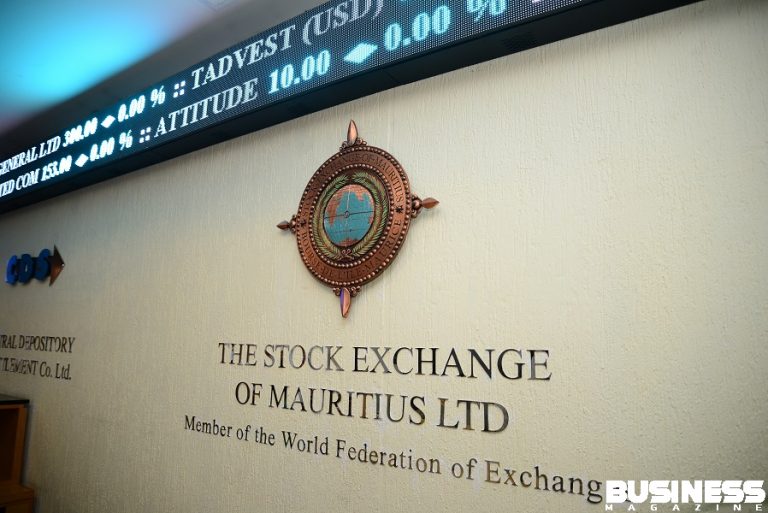
The dynamic Stock Exchange of Mauritius (www.stockexchangeofmauritius.com), among the continental leaders in IT, has long promoted MillenniumIT trading and central depository systems. In addition to powering its own markets, SEM has also advocated them on other projects in which it has been involved, such as a central African regional exchange (which did not end up using Millennium IT), also Nairobi, Dar es Salaam, Botswana, Lusaka and the Bank of Ghana CSD.
In particular, MillenniumIT’s Smart Order Router system could support the hub-and-spoke model that is adopted by the Committee of SADC Stock Exchanges. Preparations are done and this is ready to move fast once funding is approved. The model can allow exchanges to continue to regulate their brokers and other institutions, as orders can be routed through local broking houses.
MillenniumIT also won the project for linking the East African Securities Exchanges and helping solidify the East African common market for capital but this too is awaiting funding.
Jit Seneviratne, Head of Business Development, told AfricanCapitalMarketsNews: “MillenniumIT sees a major role for itself in integrating African capital markets and we will use our technology to facilitate this. It certainly helps that we are already powering several exchanges in Africa… We have already identified the manner in which the links can be done. The only challenge if at all, is not in the trading but the clearing and settlement of pan African securities, but we have a plan for this as well.”
January 12th, 2011 by Tom Minney
The London Stock Exchange (www.londonstockexchange.com) is hoping for some love from fickle traders, by announcing 14 February – Valentine’s Day – as the date to switch to anew system for its main SETS trading platform. The switch was delayed after a 2-hour outage on 2 November on the LSE’s Turquoise pan-European multi-lateral trading facility, which was already using technology provided by MillenniumIT. See our previous post on the London Stock exchange outage.
The LSE blames the outage on “human error”, according to a report in the Financial Times newspaper today (12 Jan).
That will be good news for Millennium IT (www.milleniumit.com), a Sri Lankan software company which the LSE acquired in 2009. MillenniumIT’s trading and central depository systems are already in use in many exchanges across Africa (as reported on our blog last October) and its influence is likely to grow.
Turquoise had gone live with the Millennium Exchange trading system in October 2010 and the LSE’s main platform was due to switch early in November, until the outage. The LSE press release in November hinted at sabotage: “Preliminary investigations indicate that this human error may have occurred in suspicious circumstances.” The FT reports this seems to be off the agenda after an internal inquiry.
The LSE is migrating its main trading platform, TradElect, to faster systems designed by MillenniumIT as part of a race to keep up with other exchanges that are taking market share by luring high-speed, computer driven equity traders. In an analysis article today the Financial Times reports that Chi-X Europe and other new platforms such as BATS Europe have taken 48% of the trading in the FTSE 100 list of large companies, according to data from Thomson Reuters. The LSE says its share is 58%.
Last October 2010, Turquoise announced on a website “it is now the fastest trading platform in the world. The average order entry latency on Turquoise’s new ultra-low latency trading system, developed by MillenniumIT, is 126 microseconds, twice as fast as Turquoise’s main international competitors on a like for like basis. 99.9% of all customer orders on the new system are accepted, processed and acknowledged within 400 microseconds.”
South Africa’s JSE, the Namibian Stock Exchange and Norway’s Oslo Bors are all exchanges which use TradElect because of links to the LSE, and could switch to MillenniumIT trading platforms in 2011.
Millennium IT has also supplied trading systems to the securities exchanges in Kenya, Mauritius, Tanzania and Zambia, and central depositories and settlement systems in Botswana, Ghana, Kenya, Tanzania, Uganda and Zambia, among others.
The dynamic Stock Exchange of Mauritius (www.stockexchangeofmauritius.com ), among the continental leaders in IT, has long promoted MillenniumIT trading and central depository systems. In addition to powering its own markets, SEM has also advocated them on other projects in which it has been involved, such as a central African regional exchange (which did not end up using Millennium IT), also Nairobi, Dar es Salaam, Botswana, Lusaka and the Bank of Ghana CSD.
In particular, MillenniumIT’s Smart Order Router system could support the hub-and-spoke model that is adopted by the Committee of SADC Stock Exchanges. Preparations are done and this is ready to move fast once funding is approved. The model can allow exchanges to continue to regulate their brokers and other institutions, as orders can be routed through local broking houses.
MillenniumIT also won the project for linking the East African Securities Exchanges and helping solidify the East African common market for capital but this too is awaiting funding.
Jit Seneviratne, Head of Business Development, told AfricaCapitalMarketsNews last year: “MillenniumIT sees a major role for itself in integrating African capital markets and we will use our technology to facilitate this. It certainly helps that we are already powering several exchanges in Africa… We have already identified the manner in which the links can be done.
“The only challenge if at all, is not in the trading but the clearing and settlement of pan African securities, but we have a plan for this as well.”
January 7th, 2011 by Tom Minney
The dynamic Ethiopian Commodity Exchange (www.ecx.com.et) is further spreading its information feed, and now customers can access general information and their accounts through SMS and voice telephone (“Interactive Voice Receiver” or IVR) systems, according to an article in Ethiopia’s Fortune newspaper. This is an information feed, not the automated trading systems being installed by stockbrokers on the Nairobi Stock Exchangeas highlighted on 29 Dec on this blog, as ECX trading is still done on a physical trading floor.
One key aim of the ECX is to help Ethiopian agriculture become more efficient and productive by letting farmers all over the vast country get current information on what’s going on in commodity markets. The mobile phone systems should ensure that information is cheaply and quickly available to a wide range of farmers.
The new system cost Birr 1.2 million (USD72,500) and it lets customers anywhere retrieve general information, including Ethiopian and international commodity prices, and details of their personal accounts on the ECX trading floor. All the information divulged through IVR or SMS is obtained directly from the ECX’s market data system.
Information is available through either “push” or “pull” services within 2 seconds. Through the “push” service, subscribers are provided with information about transactions as each deal is completed on the ECX trading floor. The mobile phone text messages include the volume of commodities transacted and the corresponding value (price).
The “pull” service means that subscribers send text messages to request commodity prices, the price difference from the previous day’s listings, and the volume sold. Both suppliers and buyers can use this system to access their personal account information. The IVR system is accessed by username and password.
The newspaper quotes Ahadu Woubshet, chief officer of Market Data for the ECX: “The seller or supplier will be able to find any information about their product in the warehouse. The buyer will also be able to view his ECX account information at any time and place.”
The ECX, which started trading coffee in April 2008, and long been disseminating information via price tickers onto electronic display boards and its website; as well as radio, television, and print media. From the start there were 30 price tickers in different parts of Ethiopia.Ahadu told Fortune: “The tickers helped create change in the quality of exported goods. Once farmers learned that prices depended on quality they started focusing on that.”
Since then the ECX has added 150 electronic display boards, produced by Wavetec, a Dubai company which has done similar work for the Dubai Financial Centre and 11 stock markets in Africa, including South Africa’s 2 SAFEX markets, now part of the JSE Ltd. Seven display boards are in the ECX’s headquarters (central Addis Ababa) including a 29 metres board on top of the building.
The full cost of the project is included in a loan from the World Bank (www.worldbank.org) under a “Capacity Building Programme of Latest Information Dissemination System Project”.
Fortune reports that Achim Fock, senior economist at the WB Ethiopia Office and task manager of the bank’s Rural Capacity Building Project, said: “The WB dedicated about USD7 million to support and modernise the ECX’s operations”.
Apposite LL Co., a company reportedly incorporated in the US in October 2007 which opened its Ethiopia branch in December 2007, installed the new IVR and SMS system for Birr 0.5 million, after beating a wide range of other shortlisted firms. Ethio-Telecom was paid Birr 750,000 for installing the service. The system was supposed to go live in October 2009 but implementation took longer than planned.
Fortune quotes Adam Abate, managing partner of Apposite: “We delivered the design of the system in a short time. However, the contractual and the system integration process with Ethio-Telecom (then Ethiopian Telecommunications Corporation) took longer than expected. The integration of the SMS and the IVR system, billing arrangements, and extending a fibre connecting the system to the ECX’s headquarters were some of the processes that took so long.”
The pilot phase was launched in late December and Ethio-Telecom has made 36 IVR lines available under the telephone number 929. These lines can service 1,000 people per hour.
“The company has promised to increase the lines to 100 by February 2011, which will increase the system’s capacity to service 20,000 people daily,” Ahadu told Fortune.
December 31st, 2010 by Tom Minney
What are your wishes for improvements to the African securities markets, including markets for equities and bonds, in 2011?
Who are the key movers and shakers in our continent’s capital markets development and who should this blog ask for their opinions?
Is 2011 the year that impact investing will have an impact in Africa?
It would be much appreciated if you would kindly make your suggestions using the comments boxes below. Question 1 is your ideas on the changes and improvements you would like to see and question 2 who should we ask about what difference he or she aims to make to African capital in 2011, question 3 whether you know of impact investments that make a difference. You can also discuss on the African Securities Exchange discussion forum on Linked in. In the meantime, here are a few ideas from Rob Stangroom’s excellent African IR blog -8 ideas to improve African capital markets on www.africanir.com.
We wish all our loyal readers a very happy, successful 2011 full of joy and business success. May your bull runs be elephants and may crocodiles eat the bears. Thanks for your support which encourages the blog and we hope to give you useful posts in 2011.
December 6th, 2010 by Tom Minney
According to an interview on America.gov, the firm NYSE Euronext Inc. (www.euronext.com) — the home of the New York Stock Exchange and other exchanges — has seen a threefold increase in the trading of African stocks on its exchanges over the past 5 years and twice as many exchange-traded funds (ETFs) focused on Africa in the past 12 to 18 months.
Altogether, these increases stand as clear evidence of a “strong and growing focus” on doing business in Africa, said Stefan Jekel, managing director for Europe, Middle East and Africa at NYSE Euronext, last month in the interview: “The measure of trading in African firms on our platforms has basically tripled in the last 5 years..So we now have three times the liquidity in African stocks today on our platform compared to 5 years ago.”
There are 16 African stocks listed and traded on NYSE Euronext from 6 African countries: Cameroon (1), Cote d’Ivoire (1), Gabon (1), Morocco (3), Senegal (3) and South Africa (7). The total market capitalization of those listed African companies is $90 billion.
For a fund that give investors a cross-section of African companies, Jekel suggested the many Africa-focused ETFs. “We have seen the number of exchange-traded funds that are focused on Africa double in the last 12 to 18 months. There are funds that cover South Africa, Africa, Africa’s top 40 investments, and those are all available on our platforms here in Europe and the U.S. … all with different specializations, differentiations. … So investors find a variety of solutions and opportunities to participate in the growth that can be found across Africa.”
NYSE Euronext is “very closely monitoring” the African investment climate, Jekel said. “I do not mean that in a passive way. We are very involved in initiatives in highlighting investment in Africa.”
One such initiative, he said, is its annual Ai Index Series Summit held in conjunction with Africa-investor.com (Ai www.africa-investor.com). The 2 companies recently hosted their third annual summit, which featured Robert Rubin, former U.S. treasury secretary and a member of the Africa Progress Panel, and Tony Blair, the former British prime minister, who addressed the summit via a video message.
On African stock exchanges, Jekel said, NYSE Euronext enjoys its closest ties with its client-partner exchanges in Casablanca, Tunis and Gabon, but has close ties with exchanges in South Africa, Egypt and others. There are some 29 functioning stock exchanges across the continent, with Egypt, Nigeria and South Africa accounting for 75% of Africa’s listings.
Jekel said: “We are a technology partner to the Casablanca Stock Market and to the … Bourse Régionale des Valeurs Mobilières d’Africque Centrale, or BVMAC, in Gabon and the Tunis Stock Market. By providing technology to these partners, these stock exchanges are using the same engine that NYSE/Euronext use.” He added that they share much of the insight and institutional knowledge as well.
Jekel said he soon plans to travel to South Africa for meetings with members of that country’s exchange to, as he put it, “grow our list of African issuers” and continue building momentum in the Africa investment area.
NYSE Euronext offers training for sister exchanges in Africa and worldwide “mini-internships,” he said, where visitors from other exchanges can “job-shadow” NYSE Euronext personnel.
Role of stock markets
Jekel pointed out the critical role of stock markets worldwide: “No matter where you are, developed or emerging markets, stock exchanges are where investors meet ideas — where companies come to raise capital to finance their business ideas, to finance their growth, and where investors come to participate in these success stories.”
Stock markets, he said, are also an important vehicle for bringing direct foreign investment into a country and serve as a vehicle that “allows investors to participate in the various growth opportunities that exist in emerging market nations and Africa in particular.”
Jekel stressed 2 key pillars of any functioning stock market: reliability and transparency. “I think those are some of the core principles and pillars of a stock exchange operation, and we see those philosophies being naturally adopted in Africa, so that is very comforting.”
Additionally, he said, “We see business and democracy going forward hand-in-hand in positive momentum” across Africa.
Jekel said industry experts who cover Africa on a daily basis all agree that there is a “strong and growing focus on Africa and that it will only grow from here. We see that due to the entrepreneurial spirit, the success stories that come out of Africa and the growing liquidity in its stock markets. We believe those are highly encouraging indicators of development and what is to come.” Entrepreneurs “are key everywhere, be it in the U.S. or Africa. They are the job engines. That is typically where job creation and wealth is coming from and starting.”
Looking to the future, Jekel said, “I think there is consensus among those who are following Africa that right now the BRIC countries [Brazil, Russia, India, China] have a very large role to play in world markets, but several industry insiders are pointing to Africa as a region and continent to pay close attention to over the next 10 to 20 years.”
November 17th, 2010 by Tom Minney
Africa’s capital markets have set themselves a tough programme of action, following the executive committee and annual general meetings of the African Stock Exchanges Association (www.africansea.org) held last week (10 Nov). According to an ASEA press release they are driven growing interest in African securities markets from local and international investors and decided: “..to harness the current and future growth potential of African markets and raise the visibility of African exchanges at the international level.
Plans include an improved website, development of a broad-based pan-African index which could also lead to a pan-African Exchange Traded Fund to be cross-listed on several exchanges. The continent’s securities markets are also to lobby on improving the business and investment environment in African countries as this could help Africa get a bigger share of business. They will also work closely with the African Development Bank and consider boosting the ASEA secretariat through permanent staff at their Nairobi base.
ASEA President Sunil Benimadhu, who is also the CEO of the Stock Exchange of Mauritius, chaired the meeting which was held in Livingstone, Zambia, ahead of the ASEA conference.
According to the resolution:
“ASEA Website: It is fundamental that ASEA’s website grows into a dynamic and integrated source of comprehensive and updated information on African securities markets for the wider investment community. ASEA has approved a proposal to engage a financial data services provider to revamp ASEA’s website into a highly informative website that provides extensive coverage of the daily activities of African securities exchanges.
“Development of broad based Pan African Indices: ASEA has resolved to finalize discussions with a major international index provider to develop and market a broad based Pan African Index. It is expected that this Pan African index will emerge as a reference benchmark for performance measurement for investors investing in the African markets constitutive of the index. The Pan African index may also help to create the necessary framework for the setting up of an African Exchange Traded Fund that can be cross listed across different African securities exchanges.
“Improving the environment for doing business in Eastern and Southern Africa: The Association mandated the ASEA President to engage with the World Bank and the Regional Multidisciplinary Center for Excellence (RMCE) in a regional initiative to improve the environment for doing business in Eastern and Southern Africa. This initiative aims at supporting countries to design and implement policies that will improve the business environment in Eastern and Southern Africa and ultimately increase this region’s world share of investment and exports. Securities exchanges in this region are expected to contribute to and benefit from this regional initiative.
“Establishing closer ties with the African Development Bank: The Association gave the ASEA President the mandate to pursue discussions with the African Development Bank’s “Making finance work for Africa” initiative, and the African Development Bank’s Private Sector arm in identifying areas of cooperation that can contribute to the deepening and broadening of African securities and capital markets and enable these markets to accompany the transformation of African economies, while ensuring that African securities markets emerge as key capital raising platforms to fund Africa’s future growth.
“Leon H. Sullivan Foundation: The Association resolved to issue a non binding letter of support to the Leon H. Sullivan Foundation in support of their Disapora Programme, which seeks to promote investment into African capital markets by African Americans.
“ASEA Secretariat: The realization of these initiatives underscores the importance of a Permanent ASEA Secretariat. The Nairobi Stock Exchange which currently manages the Secretariat on a voluntary basis has been requested to explore the modalities of setting up a dedicated Permanent Secretariat by the end of the first quarter of 2011. The Permanent Secretariat will be tasked with the implementation of a number of key initiatives to raise ASEA’s profile and the visibility of the member exchanges and to scale up ASEA’s activities to better service the different stakeholders of ASEA members.”
November 17th, 2010 by Tom Minney
African securities exchanges need to play a stronger role in harnessing Africa’s growth opportunities. This was the view of Sunil Benimadhu, President of the African Securities Exchanges Association (www.africansea.org) and CEO of the Stock Exchange of Mauritius (www.stockexchangeofmauritius.com), when he addressed the 14th annual conference in Livingstone, Zambia, held last week (10-12 November).
The theme of the meeting was “Integration of African Markets through Technology”. The Conference delegates included leaders and staff from African securities exchanges and representatives of the investment community and financial services sector. It was hosted by Zambia’s Lusaka Stock Exchange (www.luse.co.zm).
Mr Benimadhu, the ASEA President, said: “African countries and African stock markets being considered as the last growth frontier in the world.” He said the conference came “at a very propitious time when the African continent is increasingly being viewed by investors worldwide as a very promising investment destination with tremendous present and future growth potential”. He noted Africa is home to 25% of the world’s resources, many African countries have achieved growth rates exceeding 5% in recent years after embracing fundamental structural reform programmes, and investors are increasingly looking for superior returns outside their traditional markets.
He pledged that ASEA, as the apex body of securities exchanges in Africa, will implement a value-enhancing plan to strengthen the role of African securities exchanges in harnessing the continent’s growth opportunities, in partnership with private and public sectors.
The conference was officially opened by Hon. Dr. Situmbeko Musokotwane, Zambia’s Minister of Finance & National Planning, who said that African capital markets have a key role to play in mobilizing portfolio capital to facilitate economic development and create jobs for our youth.
Other topics discussed included:
• “Exchange liquidity – drivers of better liquidity”, Clifford Sacks (CEO South Africa and Head of Pan-African Equities, Renaissance Capital);
• “Creating a pan-African hub for seamless trading, clearing and settlement”, Anthony Mahinda Thomas Weerisghe (CEO of MillenniumIT and Director of Global Development, London Stock Exchange Group);
• “Financial literacy grows economies”, Maureen Dlamini (Senior General Manager, Education & Executive Head, Africa Board, JSE Ltd.);
• “The role of African carbon credit exchange in the development of African carbon markets”, Okey Oramah (Vice President, African Export–Import Bank);
• A fund manager’s perspective of asset management in African markets, Jonathan.Auerbach (Managing Director, Auerbach Grayson & Company, New York);
• A panel discussion on “Regional integration of African exchanges – what are the opportunities and challenges?” featured the CEOs of the Nairobi Stock Exchange, Bourse de Casablanca, and Zimbabwe Stock Exchange and chaired by Mr Benimadhu.